
HVAC Services in Chinatown, CA
Local HVAC Contractor Expertise
In Chinatown, San Francisco—a neighborhood with the nation's oldest urban Chinese community and exceptionally dense historic buildings—HVAC repair and installation demands careful attention. Air conditioning repair service | Chinatown, CA requires expertise in working with older structures, tight spaces, and the unique coastal climate. Single-room occupancy buildings, multi-unit residences, and commercial storefronts stacked tight on narrow streets create distinct cooling challenges. This page explains how our HVAC contractor services serve Chinatown's specific needs: installation, replacement, repair, and upgrades for buildings that demand precision and local knowledge.
How We Work
A clear, straightforward process that keeps you informed at every step.
What's Involved
From initial assessment through final testing, we break down each project into clear stages so you understand what comes next.
1 Assess Your Space
We inspect your home or business. In Chinatown's older buildings, we check electrical capacity, ductwork feasibility, and space constraints. Understanding your building type—SRO, mixed-use, or residential—shapes our recommendations.
2 Recommend a Solution
We propose equipment matched to your building's needs and San Francisco's mild, foggy climate. For tight spaces near Grant Avenue or Stockton Street, ductless mini-splits often make sense. We explain each option clearly.
3 Handle Installation & Permits
We manage the full installation and coordinate any required permits. Chinatown's historic preservation rules mean we know the local codes and work efficiently in compact spaces.
4 Test & Verify
Before you sign off, we run full diagnostics. Your system performs reliably through foggy winters and the occasional heat wave common in Bay Area microclimates.
5 Ongoing Support
We offer maintenance plans and emergency repair service. Because Chinatown's climate swings from fog to brief heat waves, regular upkeep prevents costly failures.
You'll always know what's happening next—and when.
Our Services
Complete HVAC solutions designed for Chinatown's dense urban environment and historic buildings.
HVAC System Installation
New construction and major upgrades in Chinatown require careful coordination. We install complete HVAC systems—including ductwork, air handlers, and condensing units—while respecting the tight footprints and architectural constraints of this historic neighborhood.
Whether you're retrofitting a ground-floor restaurant near Portsmouth Square or upgrading a residential building off Grant Avenue, we handle the complexity of older masonry structures and limited attic space.
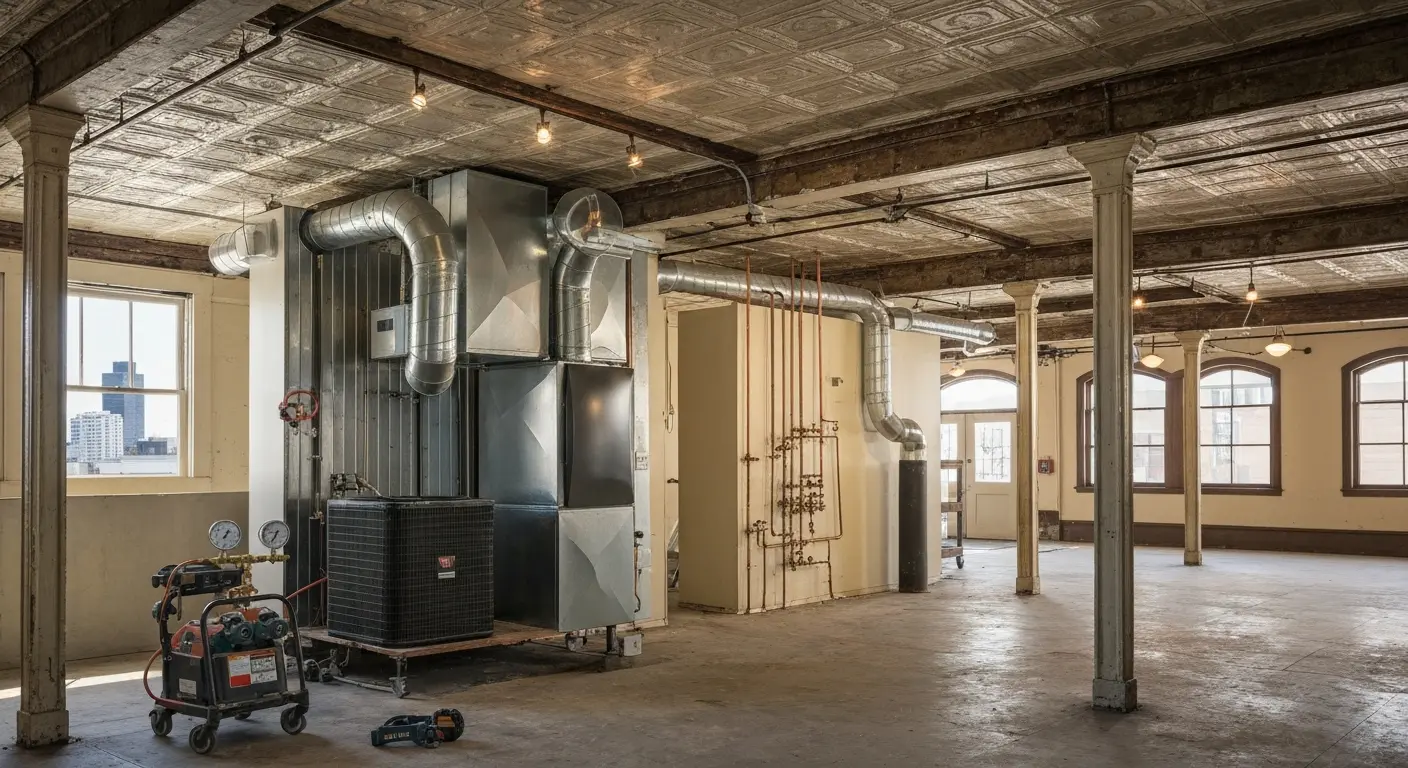
HVAC installation in mixed-use building near Chinatown's commercial core
Air Conditioning Repair Service
When your cooling system fails during a heat wave, you need a fast, reliable response. Our technicians diagnose and repair AC units across Chinatown, from single units in SROs to large commercial systems serving dim sum restaurants and shops.
We work with systems installed in pre-1950s buildings, handling unique ductwork routing and electrical challenges common to Waverly Place and the surrounding historic blocks.
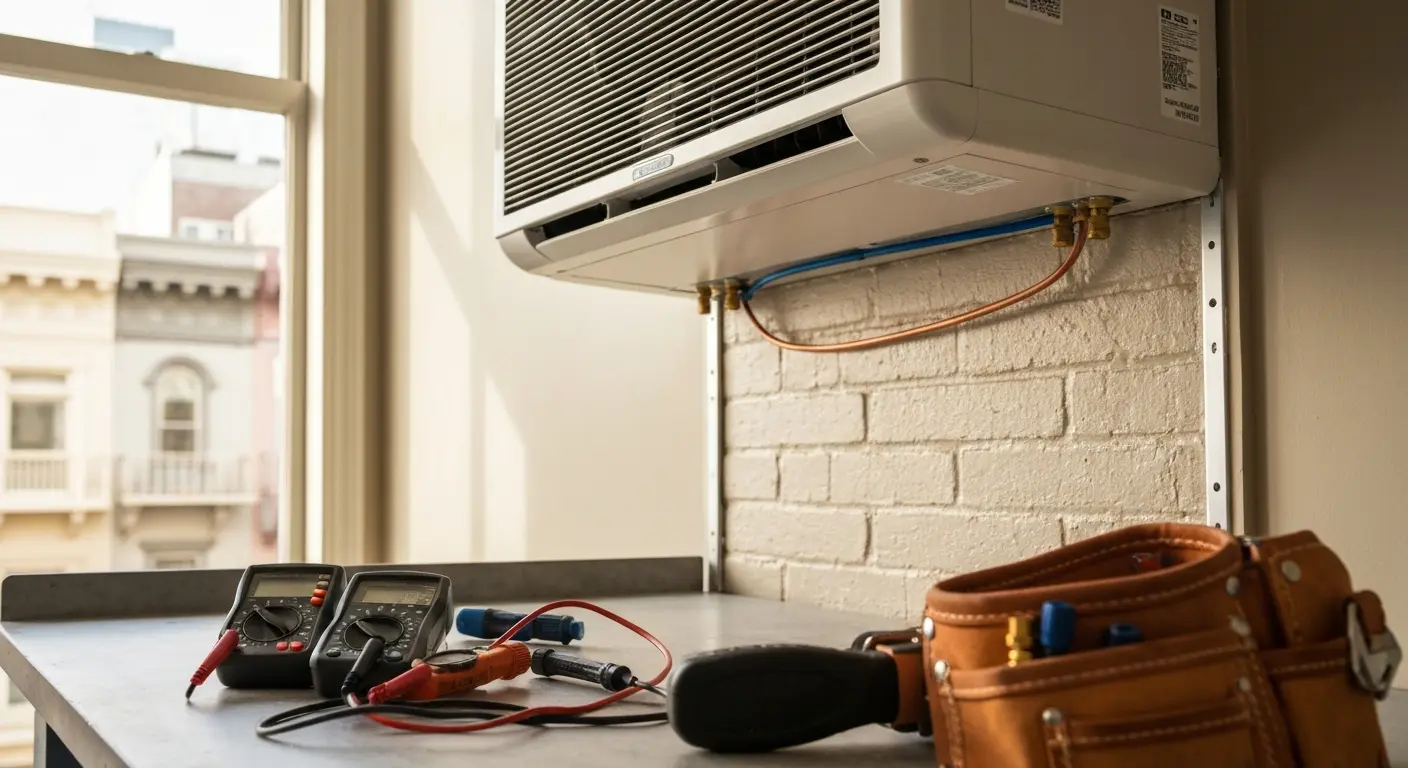
Emergency AC repair in Chinatown SRO and multi-unit residential buildings
HVAC System Replacement & Upgrades
Many Chinatown buildings were built without modern cooling systems. As extreme heat days increase, residents and business owners choose reliable replacement units. We remove old equipment and install new, efficient systems that work well in San Francisco's marine climate.
Heat pump technology now makes sense here. Modern mini-splits deliver heating and light cooling without expensive ductwork, perfect for historic preservation.
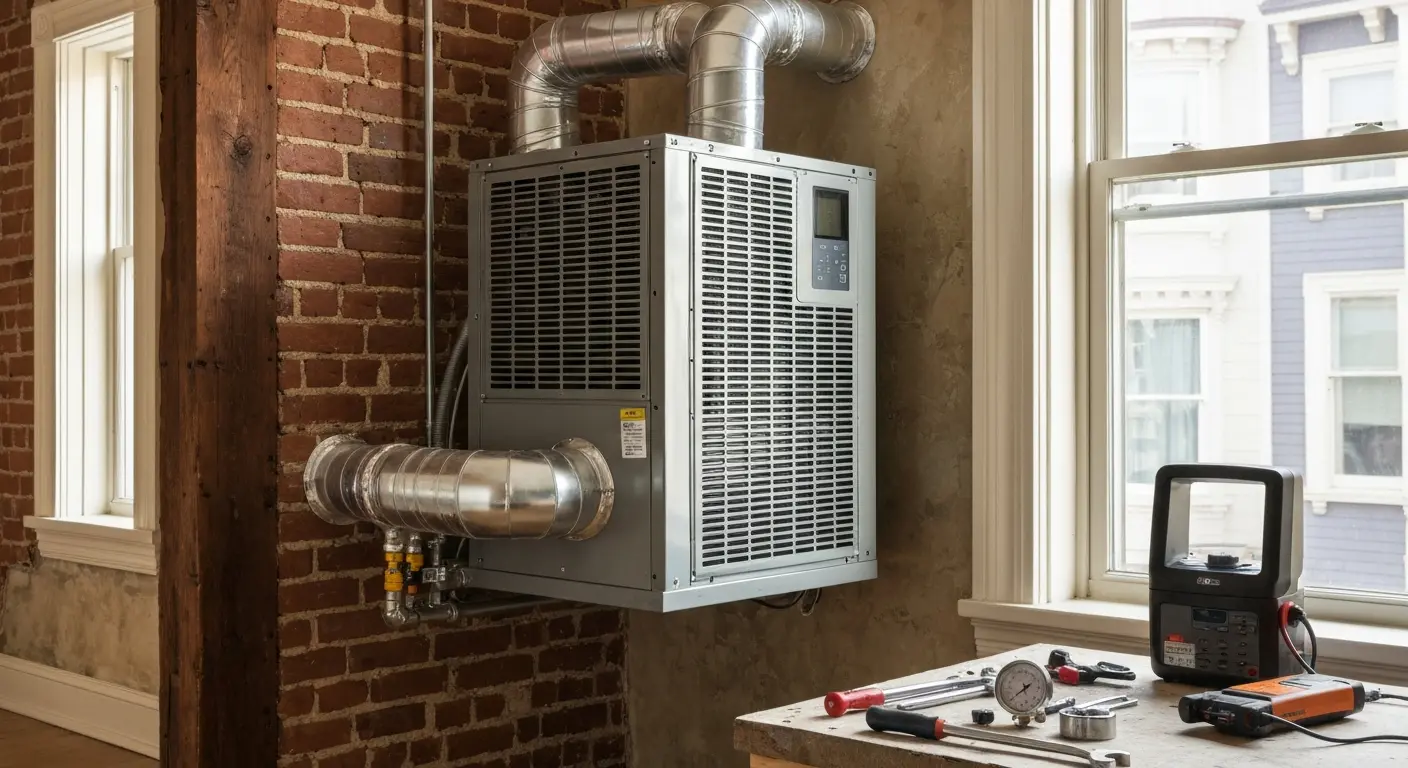
System replacement in Chinatown residential unit, preserving architectural character
Ductwork Installation & Repair
Chinatown's buildings rarely have standard attic space. We install ductwork in tight quarters—crawl spaces, wall cavities, and rooftops—routing air efficiently around structural beams, plumbing, and electrical runs.
Coastal moisture and salt air demand proper insulation and sealing. We ensure ducts handle the damp conditions common near the Bay and Dragon's Gate plaza.
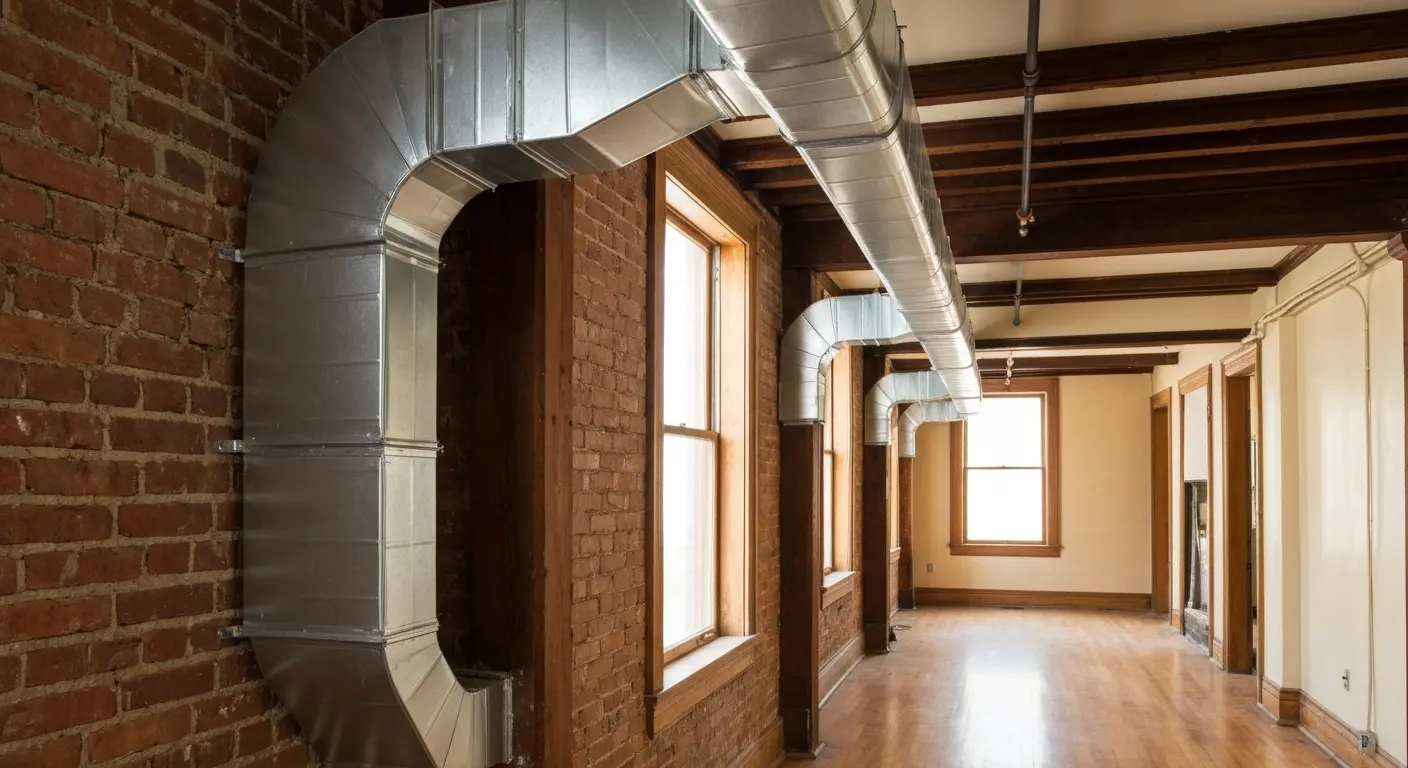
Ductwork routed through tight spaces in historic Chinatown structure
In Nob Hill and North Beach neighborhoods near Chinatown, parking and access differ. We adjust our approach for each micro-location to minimize disruption while delivering professional results.
Why Local HVAC Expertise Matters
Chinatown's Buildings Are Different
Chinatown was largely rebuilt after the 1906 earthquake with ornate architecture and limited space. The neighborhood is 'the most densely populated urban area west of Manhattan', with 15,000 residents living in 20 square blocks. Many buildings combine ground-floor shops with residential units or single-room occupancy hotels stacked overhead.
This density means HVAC systems must fit into tight footprints. San Francisco's homes are the least likely in the United States to be air conditioned, and older buildings, including Single Room Occupancy Hotels (SROs) may be especially vulnerable to overheating, and built without the electrical load capacity to sustain many upgrades. Our technicians know these constraints.
The Climate Shift
Chinatown experiences sudden heat waves and wildfire smoke. In a system the city developed to gauge each neighborhood's climate resiliency, Chinatown received the lowest overall score. 'The elderly residents of Chinatown are especially at risk due to the neighborhood's high residential density, overcrowded living conditions, and urban heat island vulnerability.' Modern cooling and air filtration have become essential for vulnerable populations, families, and business continuity.
We recommend solutions suited to the fog and brief, intense heat spikes—heat pumps and ductless systems that work without extensive infrastructure changes.
Parking & Access Logistics
Street parking near Grant Avenue and Stockton Street is extremely limited. Street parking in and around Chinatown is very limited, heavily metered, and often includes short time limits, commercial loading zones. Because the neighborhood is compact, hilly, and very popular with both locals and visitors, traffic can be steady and slow-moving, especially around major corridors like Grant Avenue and Stockton Street. We coordinate early mornings or weekday off-peak times. We know Portsmouth Square Garage and other lot options, minimizing disruption to your business or neighbors.
Local Building Codes & Permits
San Francisco's Building Code and Chinatown's historic preservation rules require expertise. We navigate permit processes, electrical upgrades, and seismic considerations. Many projects in this area need careful coordination with city departments, and we've done this work repeatedly across the neighborhood.
Experience You Can Trust
We've installed and repaired HVAC systems in 100+ Chinatown properties. We know the alleys, the noise restrictions during events and festivals, and the language preferences of residents. When your AC fails on a Saturday near Old Saint Mary's Cathedral or mid-week in a busy restaurant, we respond with local familiarity and professional expertise.
Getting Here
Directions to Chinatown
From Union Square (south entrance): Head north on Stockton Street for one block. Turn right (east) on Bush Street and continue one block. You'll see the Dragon's Gate archway on your left, marking the main entrance. Chinatown spreads north from here up to Columbus Avenue and east to Kearny Street, with Grant Avenue as the primary commercial spine.
From the Financial District (east entrance): Take Stockton Street northbound. Cross Washington Street and continue to Jackson Street. The neighborhood boundary is roughly Kearny Street to the east. Major streets include Grant, Stockton, and Clay, all running north-south through dense, narrow blocks.
Public transit: MUNI buses 1, 8, 10, 12, 30, 41, and 91 serve Chinatown. Cable car lines (Powell-Mason, Powell-Hyde, California Street) also provide access. For appointments, we recommend MUNI or ride-share due to parking scarcity.
Note: Street parking is limited and time-restricted (2-hour maximum for non-residents). Garages near Portsmouth Square and Jackson Street offer better availability. We coordinate meeting locations that minimize parking hassles.
Service Coverage
We serve the entire Chinatown neighborhood, including Waverly Place, Portsmouth Square, the core commercial district near Dragon's Gate, and surrounding residential blocks. We also extend into adjacent Nob Hill and North Beach areas where microclimates and building types overlap with Chinatown's challenges.
Frequently Asked Questions
Why don't more Chinatown buildings have AC already?
San Francisco was built for a mild, foggy climate, and retrofitting dense older buildings with full systems is expensive and complex. Chinatown's tight footprints and limited electrical capacity make upgrades challenging. As heat events increase, residents are choosing cooling solutions now.
What's the best cooling solution for an SRO building?
Individual room units or small ductless mini-splits work best in SROs, avoiding the cost and disruption of building-wide ductwork. They're energy-efficient and allow residents control over their space. We assess each unit's electrical service to ensure safe installation.
Are HVAC permits required for Chinatown projects?
Yes, most installations require permits from San Francisco. Complex projects in historic buildings may need additional approvals. We handle all permitting, which protects you legally and ensures the work meets code.
How often should I service my HVAC system in Chinatown?
We recommend maintenance twice yearly: once before summer heat season and once before winter. Coastal humidity and salt air can accelerate wear, especially on outdoor units near the bay. Regular checks prevent emergency breakdowns.
Can you work around Chinatown's festival schedule and narrow streets?
Absolutely. We coordinate around Chinese New Year, Mid-Autumn Festival, and other events. We plan deliveries and access carefully in narrow alleys and high-traffic areas, scheduling work during quieter times when possible.
Do you offer emergency after-hours service?
Yes. When an AC failure disrupts your business or threatens resident comfort during a heat wave, call us. We prioritize emergency requests and dispatch technicians to Chinatown quickly.
Local HVAC Contractor Expertise
In Chinatown, San Francisco—a neighborhood with the nation's oldest urban Chinese community and exceptionally dense historic buildings—HVAC repair and installation demands careful attention. Air conditioning repair service | Chinatown, CA requires expertise in working with older structures, tight spaces, and the unique coastal climate. Single-room occupancy buildings, multi-unit residences, and commercial storefronts stacked tight on narrow streets create distinct cooling challenges. This page explains how our HVAC contractor services serve Chinatown's specific needs: installation, replacement, repair, and upgrades for buildings that demand precision and local knowledge.
How We Work
A clear, straightforward process that keeps you informed at every step.
What's Involved
From initial assessment through final testing, we break down each project into clear stages so you understand what comes next.
Assess Your Space
We inspect your home or business. In Chinatown's older buildings, we check electrical capacity, ductwork feasibility, and space constraints. Understanding your building type—SRO, mixed-use, or residential—shapes our recommendations.
Recommend a Solution
We propose equipment matched to your building's needs and San Francisco's mild, foggy climate. For tight spaces near Grant Avenue or Stockton Street, ductless mini-splits often make sense. We explain each option clearly.
Handle Installation & Permits
We manage the full installation and coordinate any required permits. Chinatown's historic preservation rules mean we know the local codes and work efficiently in compact spaces.
Test & Verify
Before you sign off, we run full diagnostics. Your system performs reliably through foggy winters and the occasional heat wave common in Bay Area microclimates.
Ongoing Support
We offer maintenance plans and emergency repair service. Because Chinatown's climate swings from fog to brief heat waves, regular upkeep prevents costly failures.
You'll always know what's happening next—and when.
Our Services
Complete HVAC solutions designed for Chinatown's dense urban environment and historic buildings.
HVAC System Installation
New construction and major upgrades in Chinatown require careful coordination. We install complete HVAC systems—including ductwork, air handlers, and condensing units—while respecting the tight footprints and architectural constraints of this historic neighborhood.
Whether you're retrofitting a ground-floor restaurant near Portsmouth Square or upgrading a residential building off Grant Avenue, we handle the complexity of older masonry structures and limited attic space.
HVAC installation in mixed-use building near Chinatown's commercial core
Air Conditioning Repair Service
When your cooling system fails during a heat wave, you need a fast, reliable response. Our technicians diagnose and repair AC units across Chinatown, from single units in SROs to large commercial systems serving dim sum restaurants and shops.
We work with systems installed in pre-1950s buildings, handling unique ductwork routing and electrical challenges common to Waverly Place and the surrounding historic blocks.
Emergency AC repair in Chinatown SRO and multi-unit residential buildings
HVAC System Replacement & Upgrades
Many Chinatown buildings were built without modern cooling systems. As extreme heat days increase, residents and business owners choose reliable replacement units. We remove old equipment and install new, efficient systems that work well in San Francisco's marine climate.
Heat pump technology now makes sense here. Modern mini-splits deliver heating and light cooling without expensive ductwork, perfect for historic preservation.
System replacement in Chinatown residential unit, preserving architectural character
Ductwork Installation & Repair
Chinatown's buildings rarely have standard attic space. We install ductwork in tight quarters—crawl spaces, wall cavities, and rooftops—routing air efficiently around structural beams, plumbing, and electrical runs.
Coastal moisture and salt air demand proper insulation and sealing. We ensure ducts handle the damp conditions common near the Bay and Dragon's Gate plaza.
Ductwork routed through tight spaces in historic Chinatown structure
In Nob Hill and North Beach neighborhoods near Chinatown, parking and access differ. We adjust our approach for each micro-location to minimize disruption while delivering professional results.
Why Local HVAC Expertise Matters
Chinatown's Buildings Are Different
Chinatown was largely rebuilt after the 1906 earthquake with ornate architecture and limited space. The neighborhood is 'the most densely populated urban area west of Manhattan', with 15,000 residents living in 20 square blocks. Many buildings combine ground-floor shops with residential units or single-room occupancy hotels stacked overhead.
This density means HVAC systems must fit into tight footprints. San Francisco's homes are the least likely in the United States to be air conditioned, and older buildings, including Single Room Occupancy Hotels (SROs) may be especially vulnerable to overheating, and built without the electrical load capacity to sustain many upgrades. Our technicians know these constraints.
The Climate Shift
Chinatown experiences sudden heat waves and wildfire smoke. In a system the city developed to gauge each neighborhood's climate resiliency, Chinatown received the lowest overall score. 'The elderly residents of Chinatown are especially at risk due to the neighborhood's high residential density, overcrowded living conditions, and urban heat island vulnerability.' Modern cooling and air filtration have become essential for vulnerable populations, families, and business continuity.
We recommend solutions suited to the fog and brief, intense heat spikes—heat pumps and ductless systems that work without extensive infrastructure changes.
Parking & Access Logistics
Street parking near Grant Avenue and Stockton Street is extremely limited. Street parking in and around Chinatown is very limited, heavily metered, and often includes short time limits, commercial loading zones. Because the neighborhood is compact, hilly, and very popular with both locals and visitors, traffic can be steady and slow-moving, especially around major corridors like Grant Avenue and Stockton Street. We coordinate early mornings or weekday off-peak times. We know Portsmouth Square Garage and other lot options, minimizing disruption to your business or neighbors.
Local Building Codes & Permits
San Francisco's Building Code and Chinatown's historic preservation rules require expertise. We navigate permit processes, electrical upgrades, and seismic considerations. Many projects in this area need careful coordination with city departments, and we've done this work repeatedly across the neighborhood.
Experience You Can Trust
We've installed and repaired HVAC systems in 100+ Chinatown properties. We know the alleys, the noise restrictions during events and festivals, and the language preferences of residents. When your AC fails on a Saturday near Old Saint Mary's Cathedral or mid-week in a busy restaurant, we respond with local familiarity and professional expertise.
Getting Here
Directions to Chinatown
From Union Square (south entrance): Head north on Stockton Street for one block. Turn right (east) on Bush Street and continue one block. You'll see the Dragon's Gate archway on your left, marking the main entrance. Chinatown spreads north from here up to Columbus Avenue and east to Kearny Street, with Grant Avenue as the primary commercial spine.
From the Financial District (east entrance): Take Stockton Street northbound. Cross Washington Street and continue to Jackson Street. The neighborhood boundary is roughly Kearny Street to the east. Major streets include Grant, Stockton, and Clay, all running north-south through dense, narrow blocks.
Public transit: MUNI buses 1, 8, 10, 12, 30, 41, and 91 serve Chinatown. Cable car lines (Powell-Mason, Powell-Hyde, California Street) also provide access. For appointments, we recommend MUNI or ride-share due to parking scarcity.
Note: Street parking is limited and time-restricted (2-hour maximum for non-residents). Garages near Portsmouth Square and Jackson Street offer better availability. We coordinate meeting locations that minimize parking hassles.
Service Coverage
We serve the entire Chinatown neighborhood, including Waverly Place, Portsmouth Square, the core commercial district near Dragon's Gate, and surrounding residential blocks. We also extend into adjacent Nob Hill and North Beach areas where microclimates and building types overlap with Chinatown's challenges.
Frequently Asked Questions
Why don't more Chinatown buildings have AC already?
San Francisco was built for a mild, foggy climate, and retrofitting dense older buildings with full systems is expensive and complex. Chinatown's tight footprints and limited electrical capacity make upgrades challenging. As heat events increase, residents are choosing cooling solutions now.
What's the best cooling solution for an SRO building?
Individual room units or small ductless mini-splits work best in SROs, avoiding the cost and disruption of building-wide ductwork. They're energy-efficient and allow residents control over their space. We assess each unit's electrical service to ensure safe installation.
Are HVAC permits required for Chinatown projects?
Yes, most installations require permits from San Francisco. Complex projects in historic buildings may need additional approvals. We handle all permitting, which protects you legally and ensures the work meets code.
How often should I service my HVAC system in Chinatown?
We recommend maintenance twice yearly: once before summer heat season and once before winter. Coastal humidity and salt air can accelerate wear, especially on outdoor units near the bay. Regular checks prevent emergency breakdowns.
Can you work around Chinatown's festival schedule and narrow streets?
Absolutely. We coordinate around Chinese New Year, Mid-Autumn Festival, and other events. We plan deliveries and access carefully in narrow alleys and high-traffic areas, scheduling work during quieter times when possible.
Do you offer emergency after-hours service?
Yes. When an AC failure disrupts your business or threatens resident comfort during a heat wave, call us. We prioritize emergency requests and dispatch technicians to Chinatown quickly.
DISCOVER WHAT OUR CUSTOMERS HAVE TO SAY ABOUT US
REVIEWS
proudly serving these areas
San José, CA
Santa Clara, CA
Sunnyvale, CA
San Francisco, CA
Downtown San Francisco, CA
Financial District, CA
SoMa, CA
Mission District, CA
READY TO take the next step?
get a free quote TODAY!

QUICK LINKS
our services
service areas
operating HOURS
Mon: 7:00 am - 6:00 pm
Tue: 7:00 am - 6:00 pm
Wed: 7:00 am - 6:00 pm
Thu: 7:00 am - 6:00 pm
Fri: 7:00 am - 6:00 pm
Sat: 7:00 am - 6:00 pm
Sun: 7:00 am - 6:00 pm